Why I Started a Podcast Show About Founder Hardship
Key Takeaways
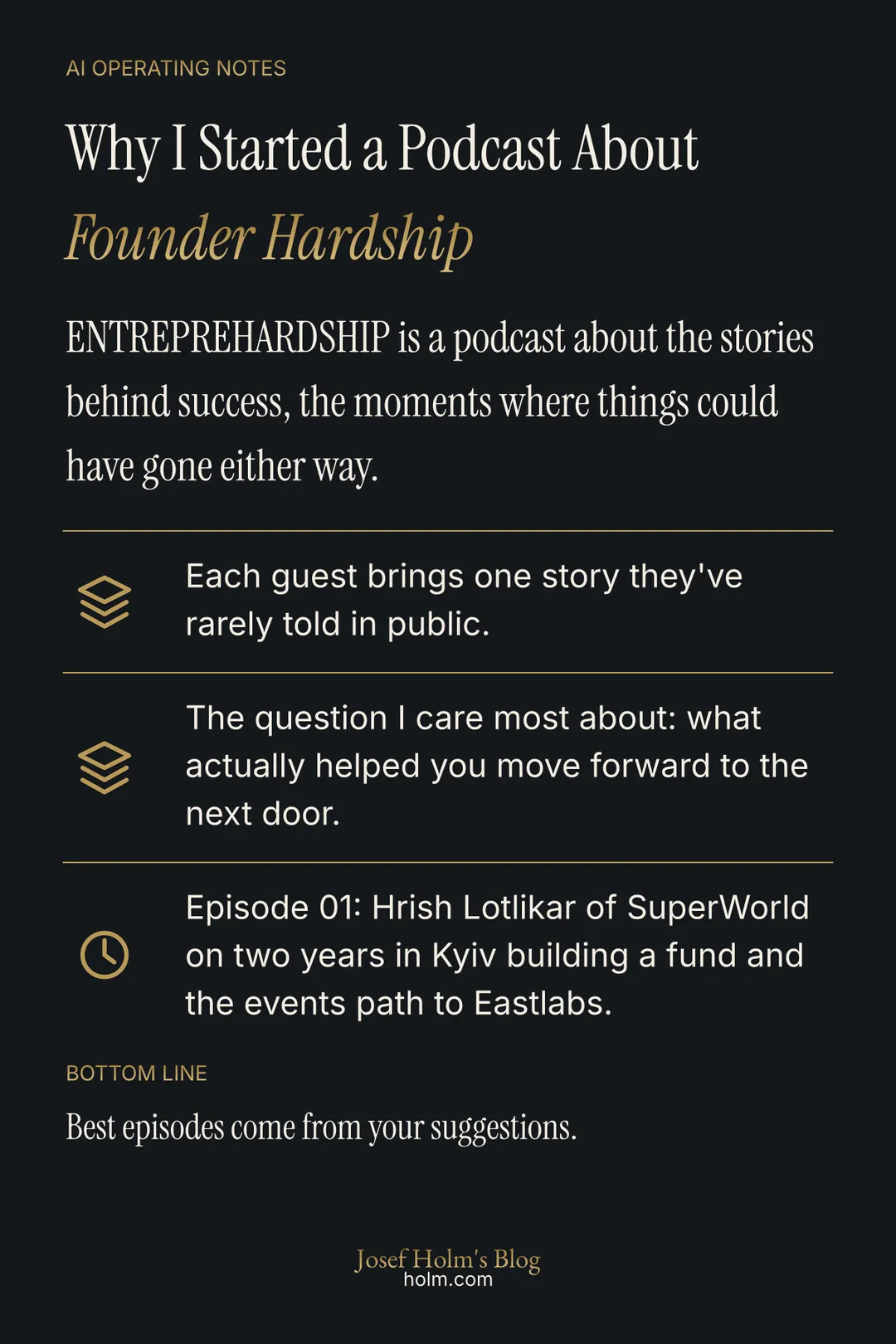
- Most founder content records the version of the story the founder has told fifty times, where every decision looks obvious in hindsight. Nobody learns anything from that. ENTREPREHARDSHIP is a podcast show about the stories behind the success stories, the moments where things could have gone either way.
- Each guest brings one story they've rarely told in public. Not a brand story. Not the version their comms team signed off on. One story. The quarter cash was short, the decision that took months, what was happening at home while the business kept asking for more.
- The question I care most about is what helped you move forward. Anyone can tell a dark story. The useful version is the one where you can also point to the conversation, the reframe, the person, or the single decision that opened the next door.
- Episode 01 is with Hrish Lotlikar, co-founder and CEO of SuperWorld, on his two years in Kyiv trying to start a venture fund while building the events business that opened a door to Eastlabs. My fund later invested in SuperWorld, so we skip the warm-up.
- The best episodes will come from your suggestions. Tell me who you would make time to hear, and more useful than the name, which part of their story you'd want us to actually get into.
Why I started ENTREPREHARDSHIP
For years I wanted to start a podcast, and every time someone told me I needed to make content and build an audience, I pushed it off again. The frame was wrong. "Build an audience" is not a reason to turn on a microphone. It's a reason to make something hollow.
What changed is simpler than that. I started paying attention to the conversations I already love having with other founders.
You know the moment. You're halfway through dinner with someone who has built something real, and the surface-level war stories have run out. Then they put the glass down and say, "Actually, here's what happened." The next 40 minutes are the reason you came.
That's the conversation I wanted to record. So I started ENTREPREHARDSHIP, a podcast show about the stories behind the success stories.
Why the polished version is the boring version
Here's what most founder content gets wrong. It records the version of the story the founder has already told fifty times, which is the version where every decision looks obvious in hindsight. Nobody learns anything from that. The founder doesn't learn anything from telling it either.
After 30 years building companies and backing founders, I'm still most curious about the part where things could have gone either way. What did you think was happening at the time? When did you realise you had to change course? Who could you actually call and tell what was really going on?
Those aren't dramatic questions. They're operating questions. The decision to extend runway by another quarter or cut hard this week is not a highlight reel moment. For the person making it, that decision is the entire business.
When you only hear from founders after things work out, it's easy to assume everyone else knew what they were doing. They didn't. I didn't. That's the thing I want listeners to walk away with.
What I'm actually asking guests to do
Each guest brings one story they've rarely told in public. Not a brand story. Not the version their comms team signed off on. One story.
It might be the quarter the business was running short of cash and nobody outside the room knew. It might be a decision that took months to make because the right answer and the comfortable answer were two different things. Or what was happening at home while the business kept asking for more.
We take the time to actually walk through it. We have a laugh where a laugh belongs. And we get to the question I care most about: what helped you move forward?
That last part matters more than the hardship itself. Anyone can tell a dark story. The useful version is the one where you can also point to the conversation, the reframe, the person, or the single decision that opened the next door.
Who this is for
If you're in the middle of a hard stretch yourself, I want you to hear something you can use. A question you can ask your co-founder tomorrow. A move you hadn't considered. Sometimes just the relief of hearing someone else name the thing you've been carrying alone.
That last one is underrated. A lot of what makes founder life hard is the belief that your situation is uniquely bad. It almost never is. Hearing someone else describe the same shape of problem does not fix the problem, but it changes what you do next.
Not in a hard stretch right now? You'll still get something out of it. Pattern recognition for the ones ahead of you. A better sense of what your own founders, portfolio companies, or operators might actually be sitting with when you ask how it's going and they say "fine."
Start with Hrish
Episode 01 is with Hrish Lotlikar. He spent about two years in Kyiv trying to start a venture fund while building the events business that ended up opening a door to Eastlabs. That sentence sounds tidy. It wasn't. We get into what that period actually looked like from the inside.
My fund later invested in SuperWorld, where Hrish is co-founder and CEO. So this is also a conversation between two people who know each other well enough to skip the warm-up and get to the part that matters.
You can watch or listen to Episode 01 here.
Tell me who should be next
I'm going to learn a lot from making this. I'd like you to help shape where it goes.
Who would you make time to hear? And more useful than the name: tell me which part of their story you'd want us to actually get into. The deal that nearly killed the company. The co-founder breakup. The pivot that looked stupid for 18 months before it looked obvious. The year they were running on fumes.
Send it over through the contact page or find me on LinkedIn. The best episodes will come from your suggestions, not mine.
Infographic
Frequently Asked Questions
- Why start a podcast after years of resisting it?
- The frame of "build an audience" was the wrong reason to turn on a microphone. What changed is I started paying attention to the conversations I already love having with other founders, the ones that start after the surface-level war stories run out. That's the conversation I wanted to record.
- What's wrong with most founder content?
- It records the version the founder has already told fifty times, where every decision looks obvious in hindsight. Nobody learns anything from that. The founder doesn't either. The useful part is the moment where things could have gone either way, and polished retellings strip that out.
- What are guests actually asked to do on ENTREPREHARDSHIP?
- Bring one story they've rarely told in public. Not a brand story. Not the version their comms team signed off on. One story. Then we walk through it slowly and get to the question I care most about: what helped you move forward.
- Who is this show for?
- Founders in the middle of a hard stretch who need a question to ask, a move to try, or the relief of hearing someone else name what they've been carrying alone. And for investors and operators, pattern recognition for the hard stretches ahead and a better read on what your people mean when they say "fine."
- Why does the "what helped you move forward" question matter more than the hardship?
- Anyone can tell a dark story. The useful version is the one where you can also point to the conversation, the reframe, the person, or the single decision that opened the next door. That's the part a listener in a hard stretch can actually use tomorrow.
- How do I suggest a guest?
- Send it through the contact page on holm.com or find me on LinkedIn. More useful than the name: tell me which part of their story you'd want us to actually get into. The deal that nearly killed the company, the co-founder breakup, the pivot that looked stupid for 18 months. The best episodes will come from your suggestions.